
Saturday, July 21: Korea vs. New Jersey
As a Jersey-born son, I find it a little peculiar how much I’ve grown fond of Korea over the past ten days. The two places couldn’t be more different — the Yin to the Yang, as it were.
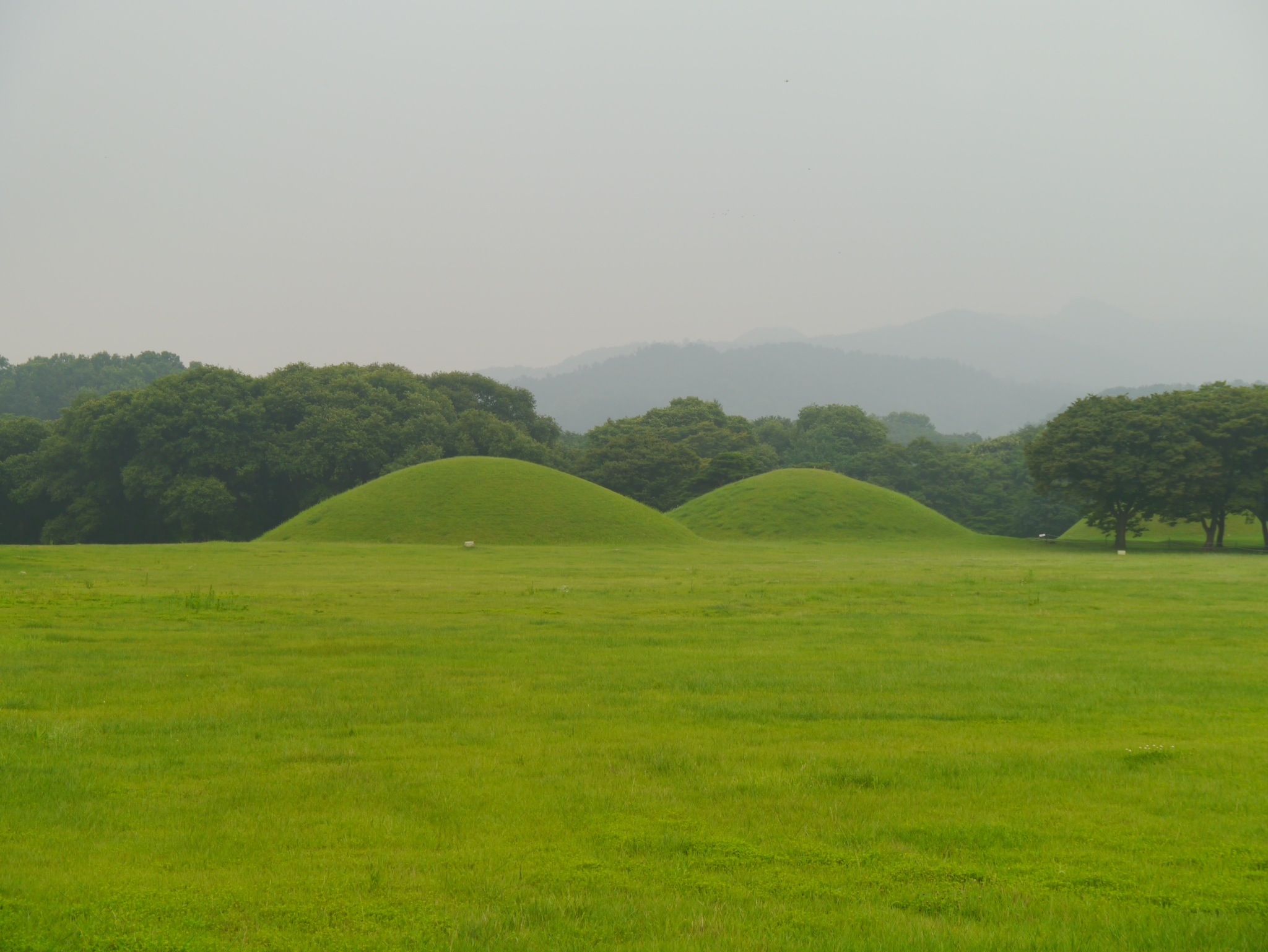
Take, for instance, the above photo of the green mounds. In NJ, those would be known as landfills. In Korea, they are the tombs of kings, court officials, and members of high society who lived during the Silla Kingdom more than a thousand years ago.
You’ll come across these graceful green lumps all over the ancient city of Gyeongju, the former capital of the Silla Kingdom. Gyeongju is far, far removed from the urban hustle of Seoul. The tranquility of its streets is enhanced by historical preservation efforts, lotus ponds, ancient temples, and building height restrictions imposed by the former South Korean president, Park Chung-hee. No one will ever mistake this place for Newark.
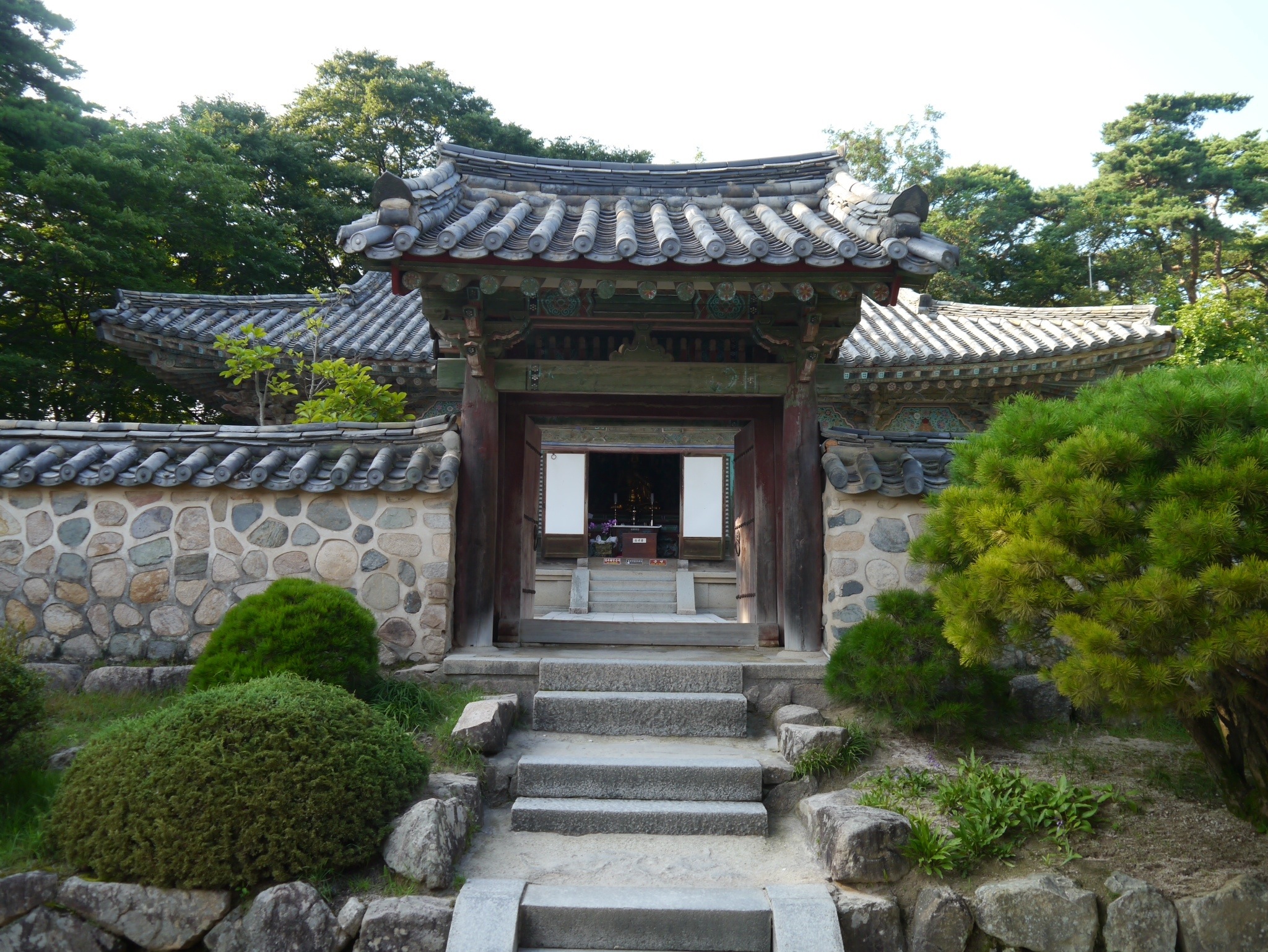
Another crucial difference between Korea and New Jersey is the concept of shimcheong. No direct English translation exists, but the gist is akin to an invisible energy that nurtures an interpersonal relationship on the basis of mutual understanding, harmony, goodwill and empathy. Shimcheong governs Korean psychology. As such, it is essential for one not to disturb the shimcheong between two individuals, whether during a complex business negotiation or an extended sexual encounter. Shimcheong explains why Korean table etiquette requires one to always fill another person’s drink, but never one’s own.
Spend 10 minutes on the NJ Turnpike or in Atlantic City, and tell me how much shimcheong is going down.
The Revered Moon aside, Koreans aren’t an overly religious culture. And truthfully, neither are New Joisyans, although they really do say “Goddamn!” a lot at the $2 window in Monmouth Park.
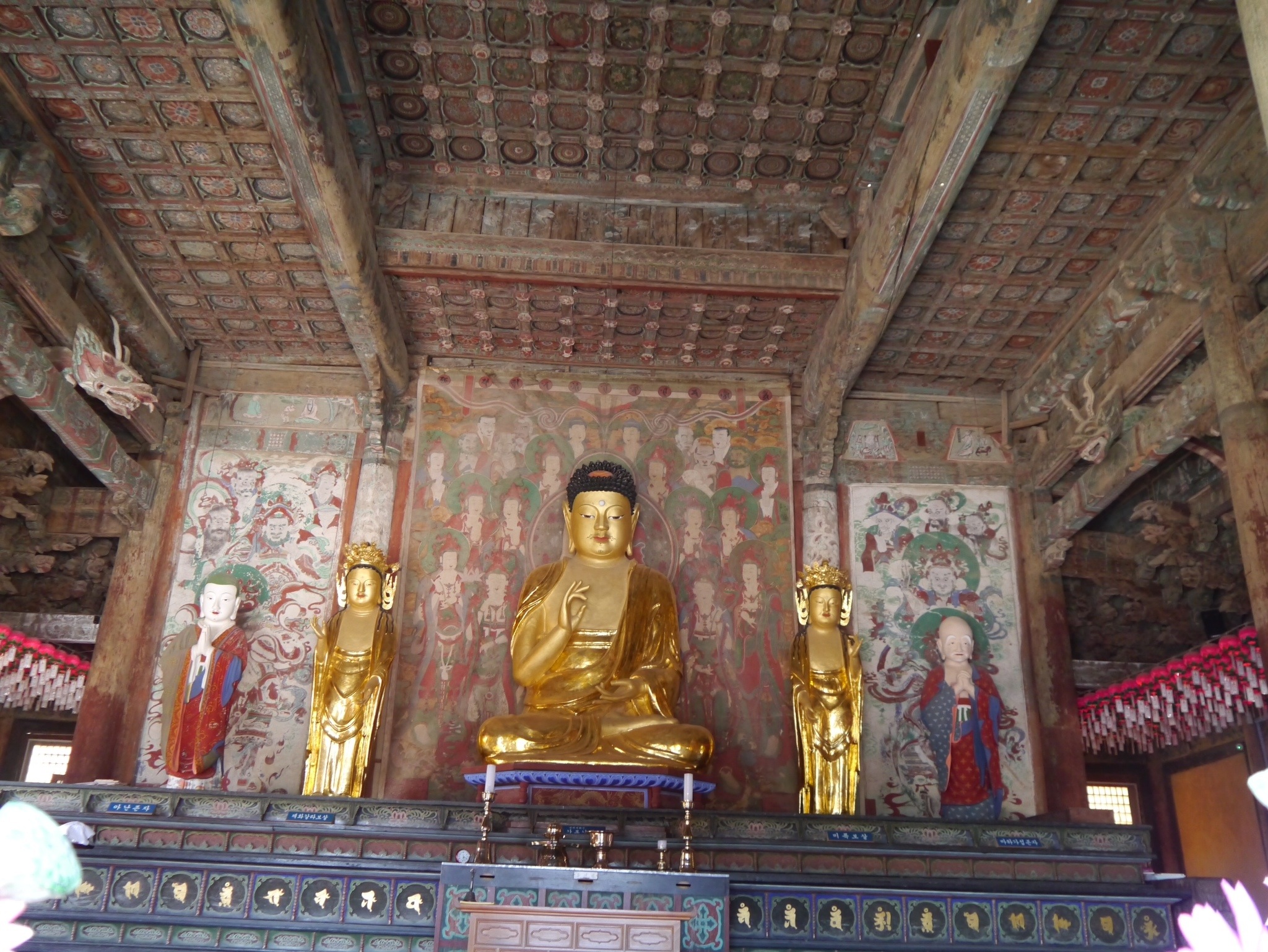
Having said that, most Koreans have an imaginary friend with a pot-belly whose teachings emphasize principles of enlightenment, balance, patience, and health in all aspects of life. This is the part of the blog where normally I’d crack a joke about the current New Jersey governor, every Republican’s imaginary friend. Instead, I’ll let my inner New Jersey stand-up comedian do the tawlkin’:
“Did you know Salman Rushdie just published a new novel?”
“No, I haven’t heard. What’s the title?”
“Buddha, You Fat Pig”
Thursday, July 19: Dear Leader
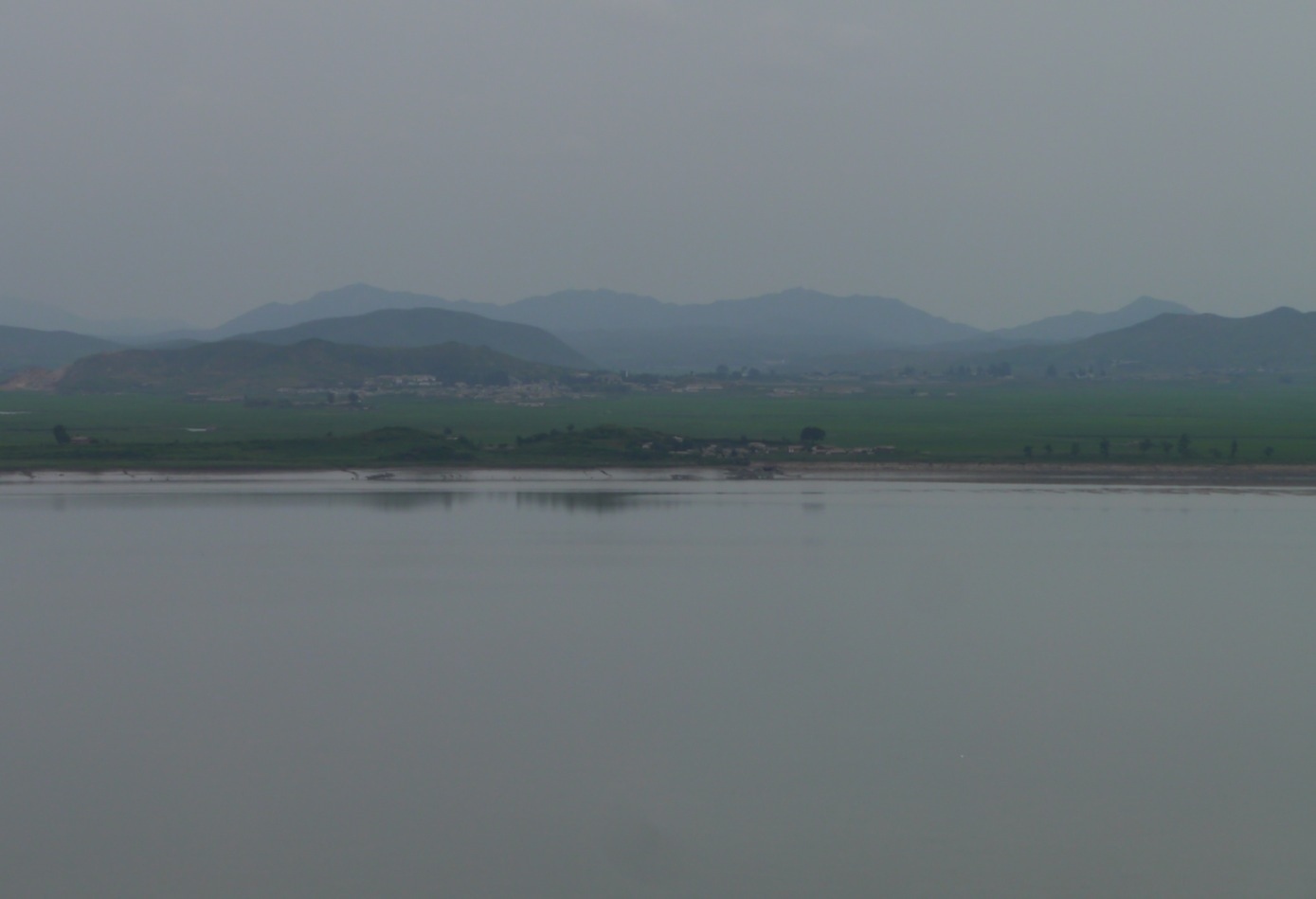
(View of North Korea from Ganghwado … yes, I need to buy a zoom lens …)
The North Korean farmer took a few tentative steps toward the officer monitoring his work. Setting down his hoe, he stood stiffly upright, saluted, and gestured back to his crops. The officer, dressed in a black and grey uniform, took notes in a field book. He appeared to ask several questions. After several minutes, the officer left and made his way up the dirt road leading to what appeared to be a small warehouse. The farmer didn’t budge.
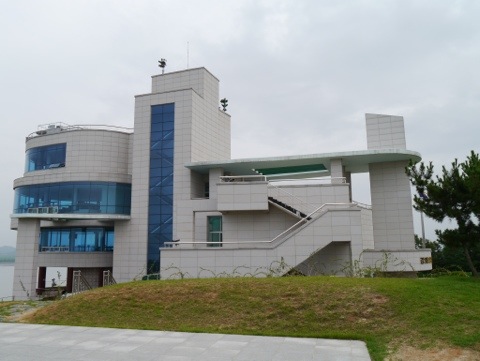
I observed this exchange through a powerful telescope at the Peace Observatory on Ganghwado island, located in an estuary of the Han River only 2.8 km from the North Korean border. On the south bank where I was perched, the hilly terrain was lush and densely vegetated, the air full of songbirds serenading from watch towers.
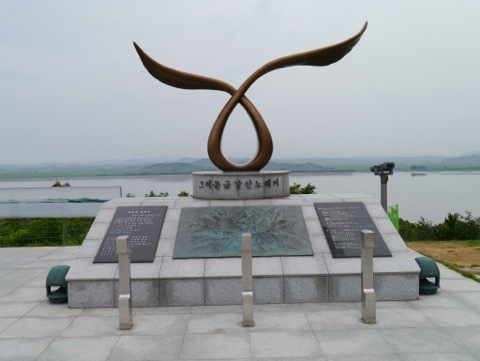
Across the river in the north, the slopes were brown and denuded.
“They cut all of the forest away, because they have so much famine and hunger,” my guide Jongnam explained. As I surveyed the land from east to west, I noticed several small settlements dotting the landscape with a handful of taller buildings. None of these structures appeared occupied or in use. All showed signs of disrepair and decay.
“Those are the propaganda villages the North Koreans built in the 1960s,” Jongnam said.
I replied, “I read somewhere that they once set up giant speakers to broadcast messages over to the South. Was that here?”
Jongnam nodded. “Oh, yes. They would appeal for us to defect and live in their paradise. Now, they don’t care what people think of these places.”
When viewed from a distance, the quiet movements of people and farm machinery through mostly vacant settlements in the north contrasted eerily with my colorful surroundings on Ganghwado. Everything that I observed on this afternoon buttressed the impression of North Korea that I’ve received over the years through Western media — as an isolated, depressed, sinister place with obstinate, self-serving rulers.
But ahh, just as in other aspects of Korean life, the truth about North Korea is rarely found on the surface.
Jongnam informed me that for many years now, Samsung and other technology giants have operated production plants in the north through cooperative agreements with the North and South Korean governments. Samsung profits from cheap labor; Pyeongyang and Seoul enjoy fuller tax coffers.
Sure, one could argue that this arrangement serves a useful development purpose. But the obvious conflict of interest makes it pretty difficult to take seriously all of the pro-unification platitudes emanating from the south.
Little insights like this really feed my desire to visit North Korea someday. Although I don’t expect to discover a socialist paradise, I wonder what other discoveries would challenge how I’ve been taught to think about this curious place.
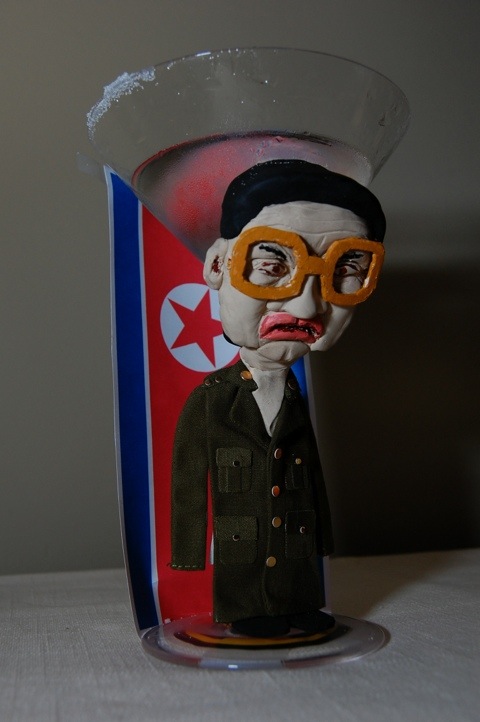
Perhaps walking into a cocktail lounge and seeing people drink from something like this …
Sunday, July 15: The Future is Asia
Korea is a wonderful place for living out my anti-social tendencies without sacrificing the amenities of modern city life.
Like being in Japan, 99% of the time I haven’t got a clue what I’m hearing when people talk, or what I’m reading in the newspaper or on billboards. Unless I initiate communication or someone approaches me if I look lost or ready to order a drink, I’m in a world of my own despite being surrounded by teeming masses of people.
Sure, it’s possible that if I understood the Korean language then people would irritate me as much as they so often do when I’m riding the Metro in DC, watching CNN or navigating an airport.
But over the last few days I’ve gathered additional evidence that life is truly different here, in ways that further convince me that a future American president will be Chinese, and that my retirement will be spent in Norway.
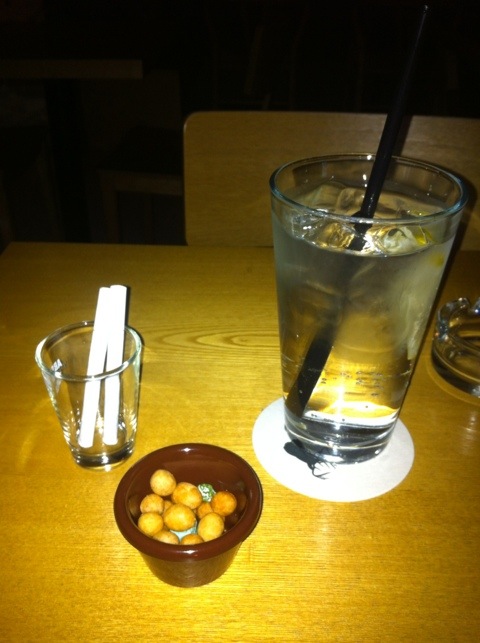
Consider, for example, the simple and thoughtful gesture of offering bar patrons two cigarettes and a side of Cocoa Puffs with a gin and tonic. I don’t smoke, but I was truly moved by the hospitality, especially since the second cigarette would give me entry to approach someone I’d be interested in meeting at the bar.
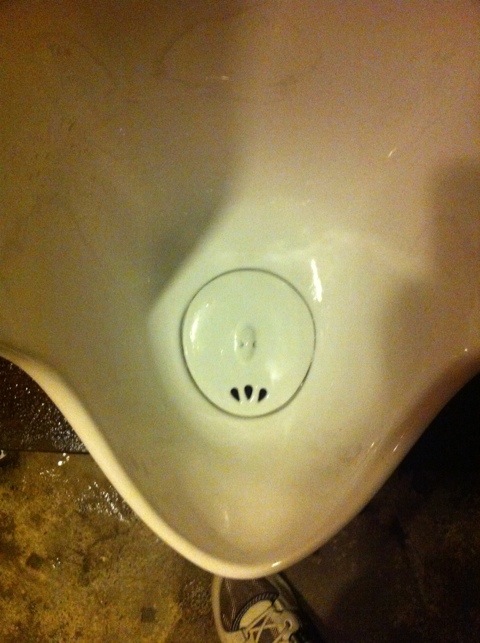
I also was struck by the Hannibal Lecter masks in the urinals. It just goes to show the extent American business acumen has been outsourced. Imagine the possibilities: pissing on the visage of Dick Cheney, Amy Holmes, Ozzie Guillen, even Jerry Sandusky …
Oh, and the entire city of Seoul is blanketed by free WiFi. Even on the subway system — the remarkably clean, extensive, intuitive and safe subway system.
Even the DMZ is forward-looking these days. With open space at a premium, why not transform this relic of the Cold War into a wildlife sanctuary. Here’s my botched attempt at surreptitiously photographing North Korea from an observatory on the south side (had I been caught, signs warned of tortuous consequences like hot needles in the eye, etc) …

Gracious, entrepreneurial, functional and environmentally conscious. Don’t say I didn’t warn you, American voters.
Thursday, July 12: I’m a Seoul Man
My flight to Seoul connected through Tokyo, a 13-hour journey normally worth a stock of Clonazepam alone. Except on this particular flight, there was a bonus: I got to sit next to 8-year old Sonia and her inattentive mother. Well, not entirely inattentive … She did mention to me that this was Sonia’s first ever international flight.
“She’s really excited,” she remarked, combing her daughter’s hair. “Could you show her how to operate the entertainment system?”
Sonia’s mother went back to reading her novel, while the daughter just sat there staring at me pouty-faced. I didn’t bother asking the mother to clarify whether she meant the plane’s entertainment system, or my personal one (the aforementioned Clonazepam, some gin minis and a Velvet Underground playlist). I just found some animated crap and encouraged Sonia to put on her headset and leave me to my thoughts.
Sure enough, by five hours into the flight I no longer cared that the little hell spawn kept kicking my shin while squealing in delight at The Incredibles, or that her mother kept rubbing deodorant on her hairy armpits. For this I am forever indebted to Travis, a flight attendant I befriended a few hours after takeoff and who kept my gin supply consistently refilled for the duration of the long-haul.
I hadn’t even been in Korea for 2 hours before a taxi driver ripped me off. Who am I to argue? Oh right, I can’t argue when “fuck you” to Korean ears sounds like a main course at a seafood restaurant.
But man, what a world of difference a hot shower makes. I’m lucky to be in Seoul at the same time as Dave, a new friend of mine from Colorado, who met me for drinks shortly after I checked in. Dave brought along a new found local acquaintance who showed us highlights of “Homo Hill” in Itaewon, a foreigner-heavy district in the center that caters to tourists, expats, the military, and plenty of Western queens.
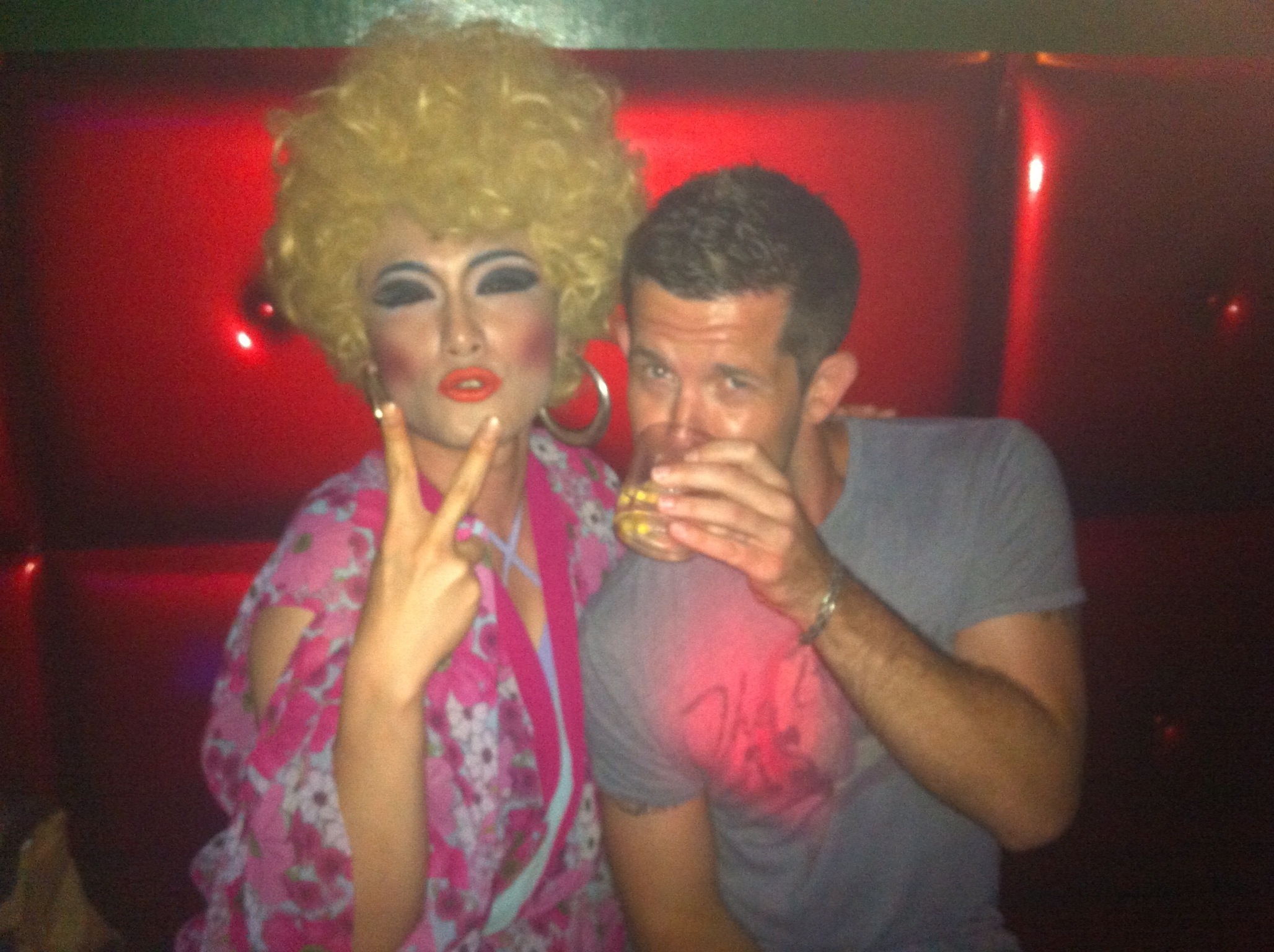
Our night ended in Trance nightclub with some “hands-on” encounters with two of Seoul’s drag heavyweights. Overall, not a bad way to spend 36-sleepless hours.
Next up: A first-time look at Seoul in daylight.
 michaelsolem.net