
Milos
June 5, 2016
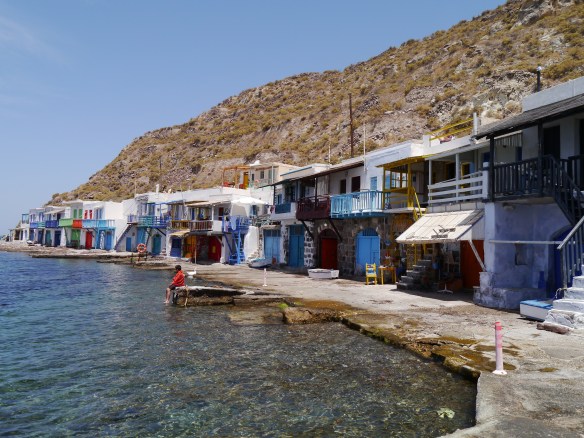
Klima, Milos.
Relative to Folegandros, Milos is a large island. It has a handful of functioning towns and even an airport, which itself is quite an attraction if you’re into adrenaline sports. I’ll leave that to your imagination.
But make no mistake: Milos is a place that is still off the radar of most tourists. As a mediating force between Folegandros and Athens, I found it a perfect spot to pick up the pace a little while never escaping the carefree ambience of island life.
Milos is a mecca for beach bums, with over a dozen smashing options that showcase the island’s incredible geological diversity. Pebbly beaches, sandy beaches, rocky beaches, you name it — there’s even a lunar beach named Sarakiniko, where you feel like you’re literally swimming on the moon.
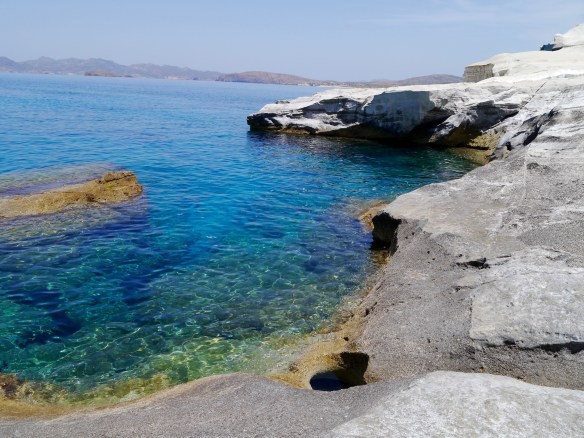
By far the best way to sample Milos’s beaches is a cruise. In fact, some beaches are accessible only by boat. I opted for a full day cruise that circumnavigated the island, stopping on three occasions for extended swimming and snorkeling opportunities. The tour included snacks, a fresh lunch, and plenty of beer and ouzo — all for just $60!
The highlight of the cruise was Kleftiko Beach, so named for its previous life as the favored cove of plundering pirates. Here and in many other locations around Milos you can swim over underwater geothermal vents that provide short bursts of warmth in the cool waters. Good to know the warmth is coming from nature rather than another tourist!
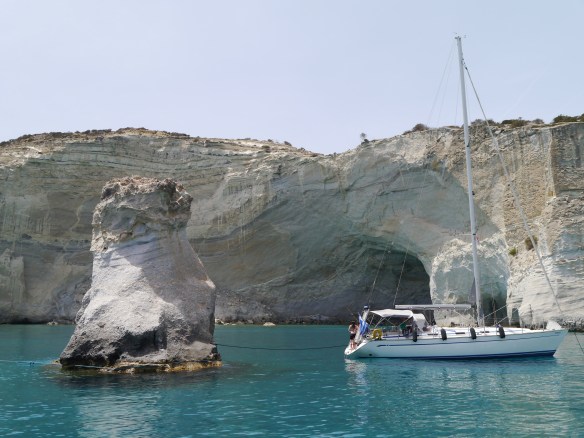
Laying anchor at Kleftiko beach.
Back on land there was one historical attraction I managed to visit, the eerie Catacombs of Milos (1st – 5th Centuries AD). Located on a hillside above the small fisherman’s village of Klima, the Catacombs initially functioned as a secret Christian burial chamber. Later the site became a place of worship. Get ready for some major creepiness as your guide walks you through portions of the galleries, which collectively span a distance of 200 m.
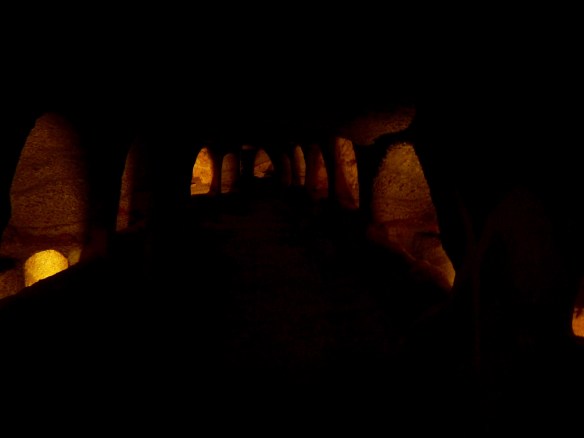
Exploring the Catacombs of Milos. Hey, what’s that sound?
Three days on Milos was a perfect continuation of my first adventure in the Cyclades. It certainly won’t be my last.
Lazing away on the beaches of Milos, my mind inevitably drifts toward the harsh reality of the times. It is hard to comprehend the horror taking place just a short distance to the south, where migrants fleeing war and terrorism continue to die by the thousands as they attempt to reach Europe in overcrowded, dilapidated boats.
Quite an odd sensation, as an American, to be visiting the birthplace of democracy at a time when the basest of nationalist instincts are infecting U.S. politics. It’s a story worthy of a Greek tragedy.
Folegandros
May 30, 2016
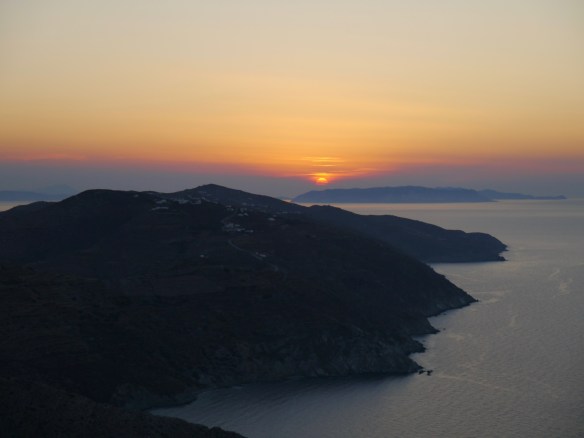
Sunset over Folegandros.
When deciding among the Cycladic islands to visit on this trip, I had a simple introverted rule: go where the crowds won’t be found.
Everyone knows about Mykonos, one of the most renowned destinations on the international party circuit. Perhaps equally famed is honeymooner haven Santorini, born from volcanic fury millennia ago.
And so, here I am on the tiny island of Folegandros. A place, in the words of my hostess, to “find oneself.”
Located only 35 miles from Santorini, Foleganros is quickly gaining a profile among travelers seeking more offbeat and peaceful alternatives. It’s a tiny island with only one proper Chora (“town”), plus the port of Karavostasis and the small village of Ano Meria.
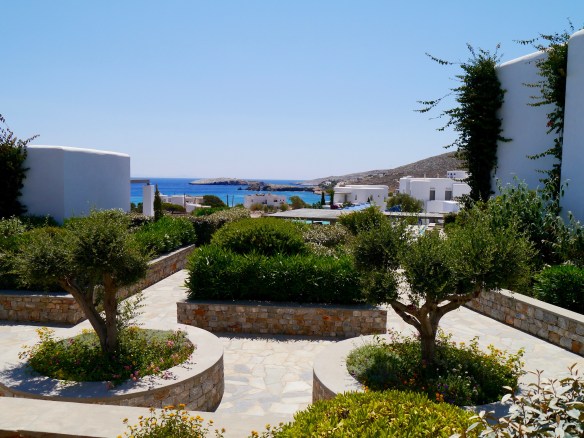
View from room, Ameni Hotel.
You know it’s a good sign when a hotel’s logo is the spinning circle that appears when shutting down an iPhone. Indeed, there is absolutely nothing to do on Folegandros, that is to say, there are no nightclubs, no cinemas, no amusement parks, and just a handful of tiny museums scattered across the rocky hills. But if your looking to eat fish caught from pristine waters, go on long treks down meandering dirt paths to secluded beaches, watch heart-melting sunsets, and wander 1,000 year old lanes in search of the finest raki, well … this is your place in Greece.
The crowds are even smaller on this visit, coming as it does on the front end of the shoulder season. People are far outnumbered by stray cats, including this one.
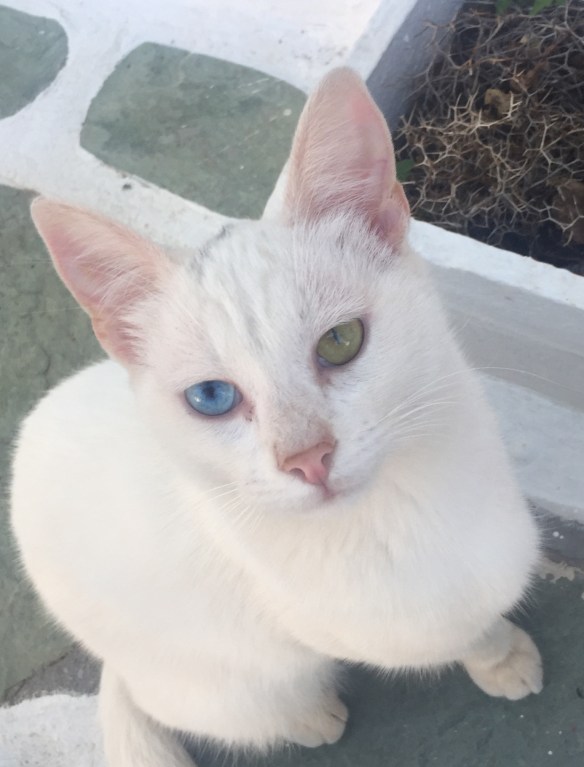
David Meowie
Despite its small size, you’ll need a scooter, car or buggy – my choice – to get around Folegandros. My first destination, after unpacking and doing some laps in the infinity pool, was the Kastro of Chora, the island’s original settlement. Motorized vehicles are off limits in the Kastro, but the footprint is tiny and besides there’s no better way to enjoy its mystique than via an aimless wander.
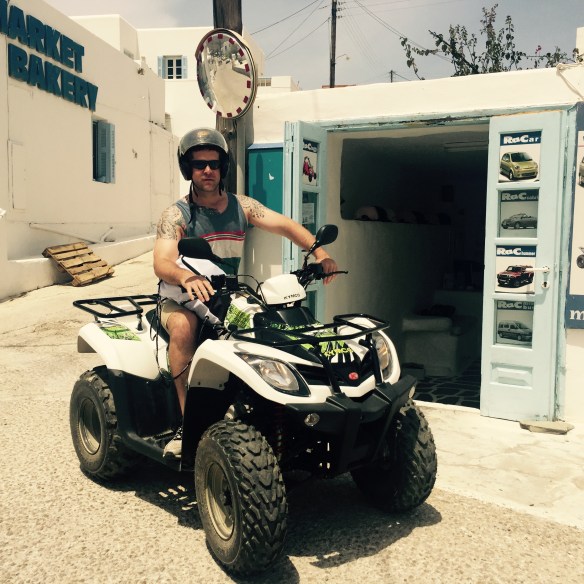
B-B-B-Baaaaad.
After a refreshingly healthy meal at a local taverna, I walked off some of the calories by making the 15-minute climb up the hill to the Church of Panagia (Virgin Mary). This is one of the island’s prime vantage points for reflecting on life as the sun sets over the Aegaen.
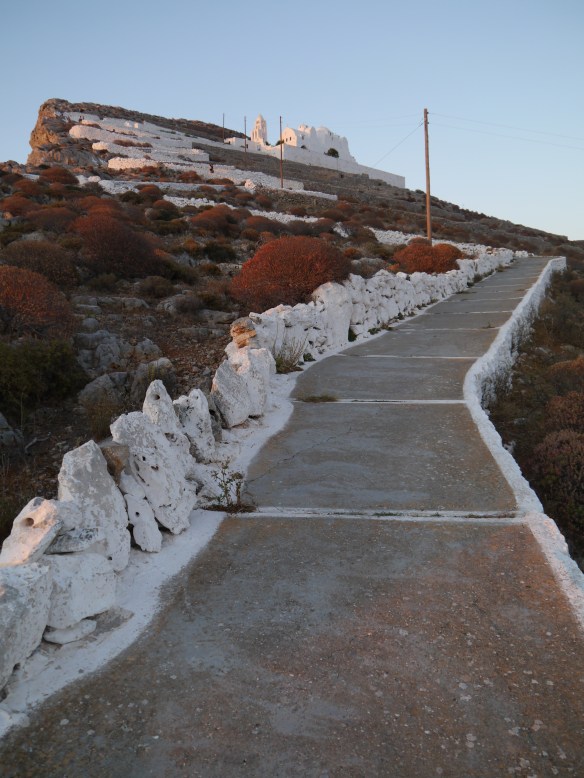
Church of Panagia
I spent an entire day riding my buggy to secluded beaches for swims in crystal clear waters, stopping along the way for a refreshing Mythos whenever my thirst grew unbearable. My favoriate discovery was the throwback village of Ano Meria, where I found a little taverna, Mimis. I just had to try the local delicacy matsata, a traditional dish of rabbit and homemade pasta.
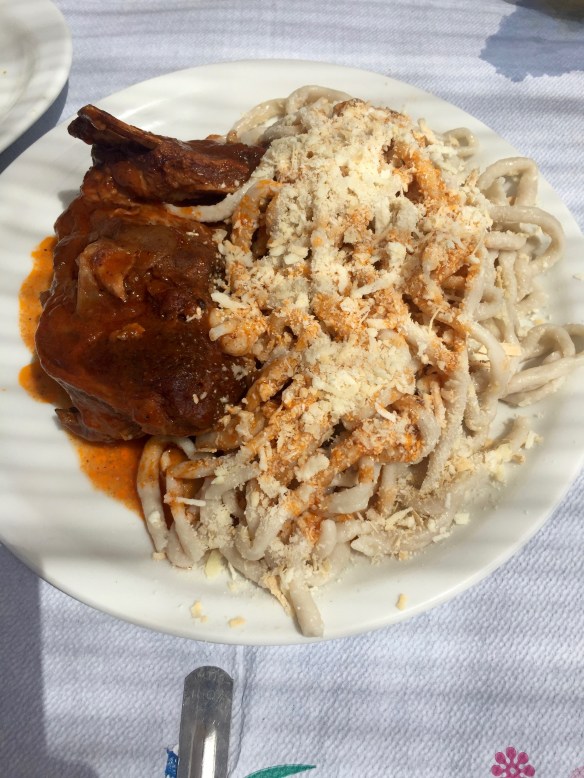
A heaping portion of matsata.
At the end of the day I drove my buggy northwest until the road ended, for one last sunset on Folegandros. Scanning the hillsides, sometimes my mind would drift off and imagine Talos coming ‘round one of those rocky peaks.
Yessir, I am now officially 100% in “island mode”. It’s hard to imagine picking up work again on Thursday in Athens. Until then, there’s three nights to chill on Milos island, my next destination in the Cyclades.
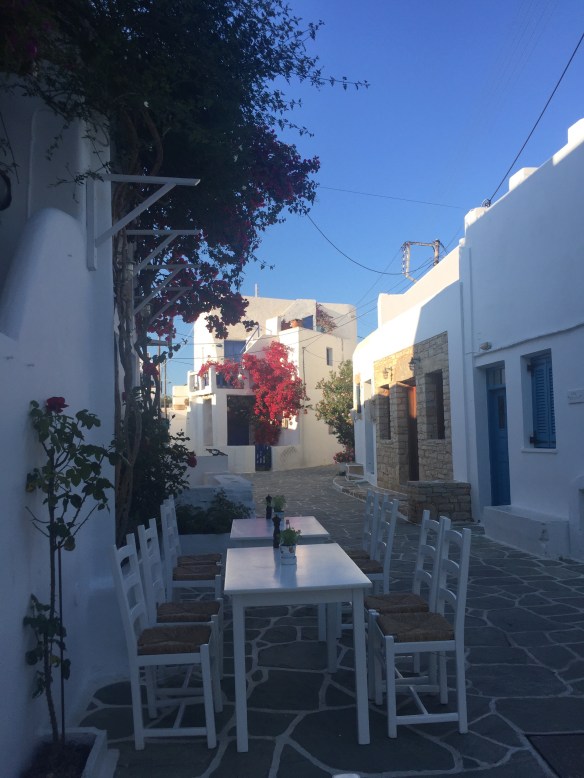
Eva’s Garden, a restaurant in the Kastro of Folegandros Town (Chora).
Next up: Milos
Athens
May 27, 2016
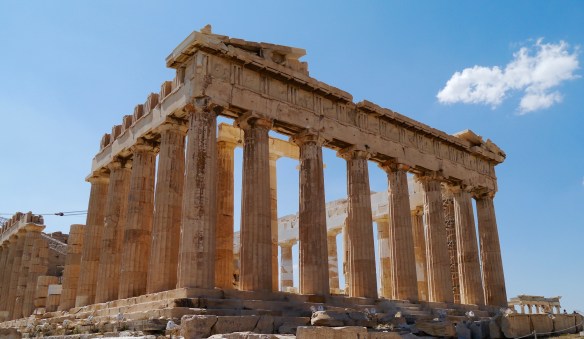
Parthenon.
Praise the Gods, I made it to Greece!
My bucket list got a little shorter the moment my plane landed in Athens. Greek mythology has always stoked my imagination. As a kid I was a huge fan of all of those classic Ray Harryhausen flicks like Jason and the Argonauts and Clash of the Titans.
So when I saw the famed Parthenon atop the Acropolis just a few minutes walk from my hotel in the Plaka district, I couldn’t help but wonder if Medusa was lurking behind one of those mighty pillars.
Seriously, what better way to ward of jet lag than a few hours of tramping and taking photos all over a 2,000+ year old, still active archeological site.
So I laced up some trainers, grabbed my camera, paid my EUR 20 entrance fee, and made my way to the south entrance of the monument. One of the first sites of interest you’ll encounter from this access point is the theater of my favorite Greek deity, Dionysus (God of Wine). This is the very site where Greek orators read aloud the classical plays and tweets of Socrates, Aristophanes, Euripides, and Trumpoloupos.
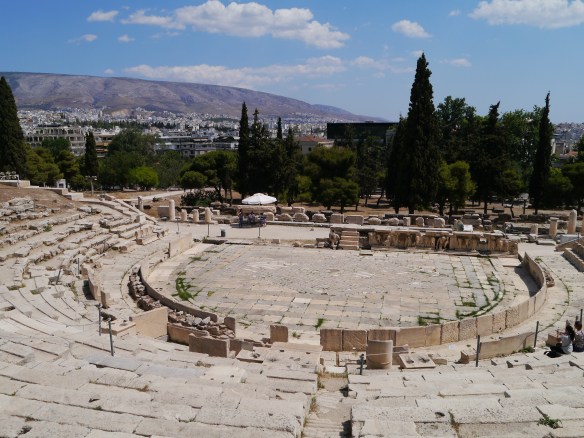
Theater of Dionysus.
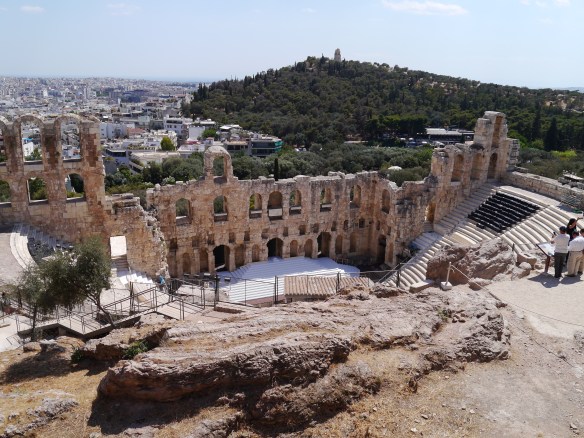
Just a little further takes you to the Odeion of Herodes Atticus, with spectacular views of the city and Aegean sea. Though much of the crumbling structure remains, the Odeion has been modernized to host outdoor musical and theatrical performances. What a great place for a date night (next time, Alex)! 🙂
Just a short distance from here lies the sick-but-regal Parthenon (447-434 BC), which is currently undergoing some massive rehabilitation work. I really enjoyed reading about the preservation techniques used to maintain this ancient temple to goddess Athena. Much of the original statuary, frescoes, and columns have been relocated to the new Acropolis Museum (at least those artifacts such as the Elgin Marbles that weren’t pilfered by the Brits), with replacements meticulously carved and rebuilt from the same stone and marble.
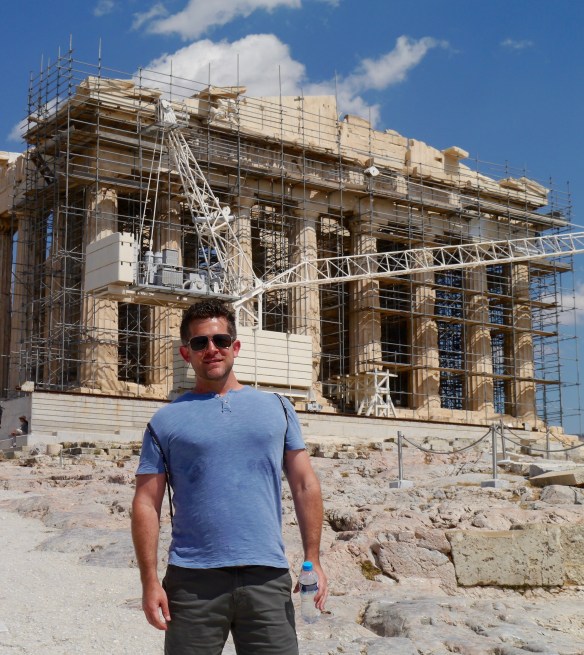
Me supervising restorations and repairs at the Parthenon.
The Acropolis features several other highly significant ruins and sites, including the Erechtheion and nearby Agora marketplace where ancient Athenians gathered to shop for olives and other goodies.
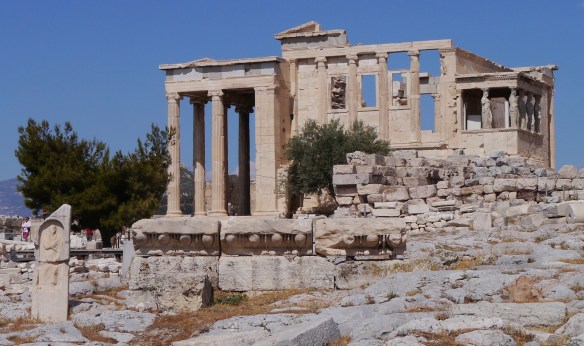
Erechtheion.
Standing in the midst of all of this history is extremely compelling, yet after a few hours one must abide the unrelenting Greek sun and seek out some more contemporary delights such as a frosty Mythos pilsner.
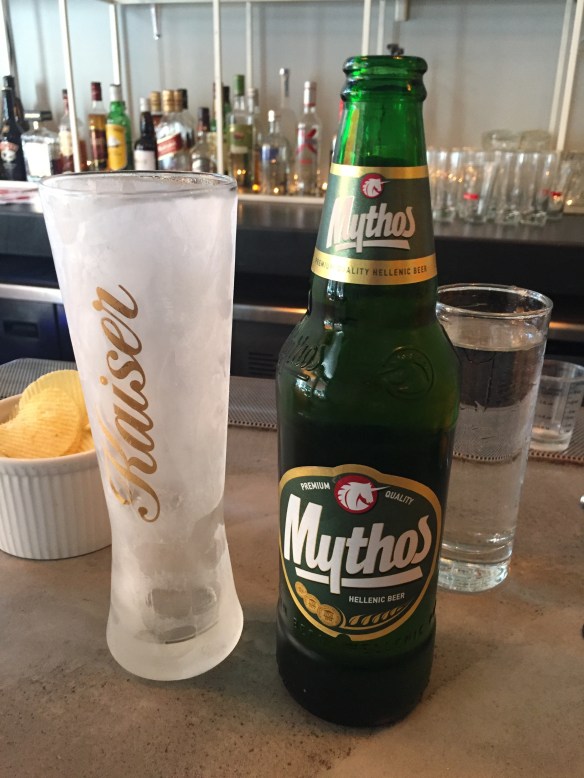
This didn’t last long.
I ended up eating a seafood pasta dinner around the time most “Greecians” are finishing a late lunch. But with a rapidly approaching 5:00 AM wake-up call (surely, Zeus would have not approved), I decided it was best to cap off an early night with a few glasses of ouzo at my hotel’s rooftop bar, and one last glimpse of the Acropolis lit majestically by fading pink sunbeams. A few hours of sleep later, my driver took me to the ferry terminal in the nearby port of Piraeus. And so it is time to head off to the islands of the Cyclades, where this story will continue.
Next up: Folegandros
 michaelsolem.net