
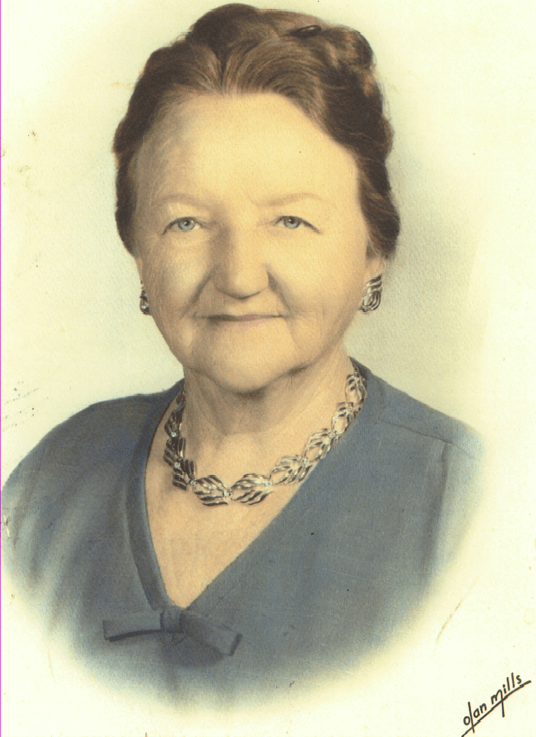
Signe’s American Dream
Dear Grandmother,
I felt your hand cling to mine as the clouds parted above Hitra, letting a peachy ray of sun 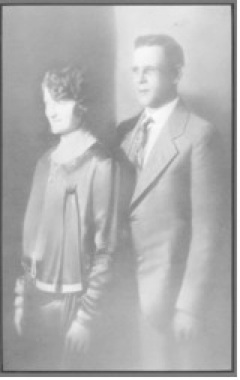 sweep over the dark waters where legions of cod play. Generations ago those same fishy specimens nurtured your livelihood. They schooled you, fortified your bones, and punished you on the rare occasions when you misbehaved. Their oily scales are the stuff from which particular dreams are made.
Did you experience a sense of doubt on that day in 1923 when you boarded the vessel that would carry you westward across the Atlantic? Did you find yourself longing for the lapping waters of Hitra as your ship made its final call at Liverpool? Or was your sleep comforted by your husband’s promise to find and make a home for you in America? These are questions that the child who knew you for 13 years never asked, but ones which the man who admires you now can only wonder.
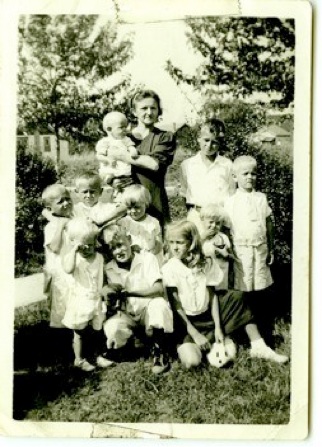
Ten years later you stand like Lady Liberty on the farm, with ten tearful children by your side. What do you see as you look across the New Jersey fields, with a gaze that could flatten Hiroshima? Are you marshaling your countrymen to huddle beside you on the American shore? A sum greater than the individual parts is an aspiration worthy of families and federal republics. In the helpless stupor of his drinking, I can only imagine my grandfather weeping silently at his trembling, empty hands as you worked the fields and scrubbed the floors of wealthier neighbors.
If I were Norway’s King, I would mint coinage bearing your likeness so that schoolchildren would learn the virtues of frugality and selflessness. From the hours you spent massaging your eldest son’s polio-stricken legs, to the stroke that claimed you in the kitchen preparing medicine and supper for another incapacitated son, you dignified the life of others and gave the family vitality. When I close my eyes and mind to the outside world, I can summon the taste of your butter cookies, the sound of your kisses on my cheeks, and the fragrance of your perfumes and lotions. The Solem homestead is gone, but dozens more have sprung from its foundation. Our love for you remains boundless across continents, even as we age and begin to slip away.
And now all I can say is thank you, dear grandmother, for braving years of the Depression and your husband’s alcoholic hand.
Because you had a dream, I now have some of my own.
***********************************************************************
Sivert’s View

Sverre Lilleeng is one of the last living nephews of my grandmother, Signe. I visited him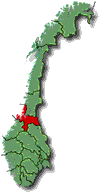 and his wife Heffi in their Trondheim home on the final weekend of my trip to Norway in November 2007. They’ve been married for 53 years, and have lived in the north central province of Trondelag for most of that time.
“Sverre,” I asked one night while we studied old photo albums, “what can you tell me about the name Solem. What does it mean, and where did it originate?”
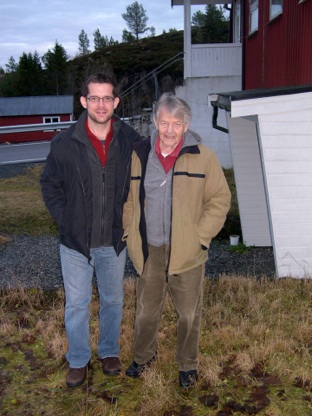
“Solem means Sun’s Home,” Sverre explained, because it is a synthesis of two Norwegian words: sol (sun) and hjem(home)”. It is a familiar surname in Norway and is linked to families who resided in the country’s northern expanses, where in the summer months the sun itself seems to be a permanent fixture of the sky.
Sverre was a cherished teacher and remains a renowned historian of Norway. At 85, he still writes “This Week in History” columns for the alternative city newspaper in Trondheim. Many of his articles deal with the Nazi occupation of Norway in the 1940s. He showed me his collection of period newspaper clippings and told me stories about how he and his friends lived under threat of deportation should they attempt escape, and how his father narrowly eluded capture as he participated in the resistance movements that undermined the Nazi forces throughout Scandinavia.
On a cloudy but dry Saturday, Bjørn drove Sverre and I to our first destination: the island of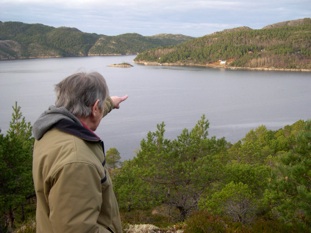 Asoya, where my great grandfather Bernhard Kvale first built a home. Although the original house is no longer there, having burned down five years ago, it has been rebuilt by the family to replicate the original building. In the photo to the right, Sverre is pointing toward Asoya; the white house is the site of the Kvale homestead.
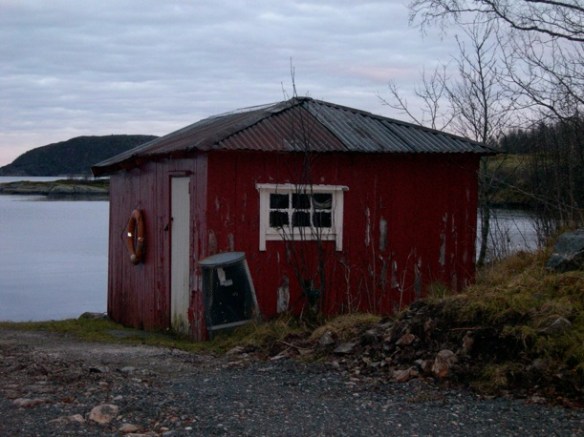
From Asoya we drove to the island of Hitra, where my grandmother was born and spent her early school years. To reach Hitra, it is necessary to drive through a tunnel that plunges to a depth of 264 meters under the sea. We managed to track down the site of my great-great grandfather (pictured here) Sivert’s boathouse, which is still standing. Sivert 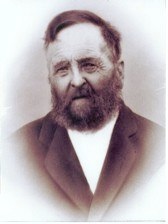 is a dead ringer for a cousin of mine, Richard, who lives in South Jersey.
I spent the rest of the weekend watching the Norwegian soccer team and drinking a lot of beer with Bjorn at an amazing pub in Trondheim (the waitress was kind enough to let me take a pint glass from the establishment, but regrettably it didn’t survive the flight home).
As we drove off Sunday morning to the airport, I turned to look once more at Sverre and Heffi. They were standing in the doorway, waving and smiling and never stopping until our car rounded the bend, placing us out of view. And thus I left Trondheim with a forward-looking optimism girded in connections with my recent and distant past.
I hope someday that I can honor the memory of this place with the same poetic grace and elegance of Sverre, Heffi, and Bjorn.
***********************************************************************
My House
Originally published March 22, 2008
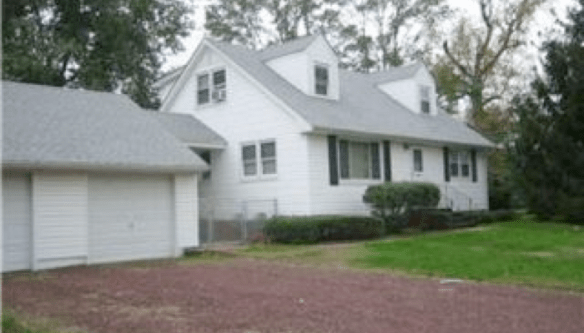
Very soon, for the first time in my life, I’ll never truly be able to go home again.
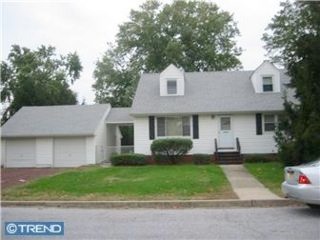
138 Berkley Ave. in Mt. Royal, NJ — a cape house on a small street in a smaller town — is up for sale, and the first offer came in this morning. Built in 1958 by my grandmother, Elsie Thomas, it is the place where I lived from birth until college.
 My house was a place that would change, chameleon-like, with the emotions of those who lived inside. In my childhood and teenage years, it exhibited the trappings of a solidly middle-class, blue-collar family: garish wood paneling on the walls, a TV in every room, video game consoles, big cars in the driveway, and neighborhood kids asking to swim in the aboveground pool.
When my mother’s health began to deteriorate in the late 1990s, the house showed its dismay: no flowers grew in the gardens, the driveway became overrun with weeds, dust caked my mother’s porcelain doll collection, even the rabbits and birds seemed to keep away. My stepfather tried valiantly to keep up appearances, but there’s only so much one can expect of a man working the night shift at 70. Now, with both of them gone, the house also stands empty save for an old chair, a few scattered tables, a flower vase, and other random items leftover to “show” the house for the forthcoming real estate transaction.
This is a house where, when I was maybe 8, I snuck into my Mom’s bedroom, applied her lipstick, and ran upstairs to the apartment where my grandmother lived. A former nurse, I think she could tell something was up.
I can remember listening to Billy Joel and the Close Encounters of the Third Kind soundtrack on the station wagon’s 8-track player while being driven for my weekend visits with Dad. Sometimes we’d stop for cheese fries at Don and Burt’s Custard Stand, a little burger joint down the road in Paulsboro. They served the best hot fudge sundaes.
I used to play a lot of practical jokes on my family. When I was old enough to take a bath by myself, I sat in the tub quietly until a long time had passed. Mom knocked on the door and asked if I was OK, but I didn’t answer. When she came into the bathroom and pulled back the tub’s frosted glass door, she found me floating face down in the water (holding my breath). It would be my first and last spanking.
Many years later, I came out to my Mom while we planted flowers around the pool. Her reaction was she had no reaction, except for a hug.
I remember, too, this cool soap that my Mom used to buy for me. It would reveal different zoo animals as the layers wore away.
The pool was a lot of fun on those humid New Jersey summers. One time I accidentally chipped my front tooth while I was horsing around with my stepdad. He used to call me “mole”, a nickname which I never quite understood.
Down the street there used to be a corner store owned by a Jewish couple. I used to buy penny candy there. The red jelly fish were my favorite. Shortly after I started middle school, the couple sold the store to Wawa. My friend John and I were mugged there one afternoon. Until a tornado ripped through town two years ago, that was the most excitement Mt. Royal had seen in some time.
My mother once chased my older sister down the street with a broom after catching her smoking weed with some friends, one of whom, Timmy, had the most beautiful blue eyes.
Of my several dogs, Brutus was the champ. A Great Dane with a snout split in black-and-grey halves, he looked and sounded ferocious, but was in reality a big baby. Brutus used to sleep in my room and more than occasionally I would wake up, barely able to breath with him sprawled across my back, snoring away.
Shortly before my sister went off to college, I sat in her room thumbing through her record collection. Her fondness for David Bowie was the only thing we had in common.
Across the street from my house is the Mt Royal fire station. To this day, the siren wakes the neighbors at inopportune hours of the night, much like our alcoholic neighbor George Moore used to do when his wife refused to let him inside.
I wonder if the new kid who moves into my house will find my old Star Wars action figures or comic books hidden somewhere I left them, forgotten after all these years.
The childhood home is a one-of-a-kind place that, once gone, can neither be reconstructed nor resurrected. I doubt I’ll ever meet the new owners. But if I do, I can recommend a good place for cheese fries.
 michaelsolem.net